
Every word she writes is a lie, including ‘a,’ ‘and,’ and ‘the.’
Mary McCarthy, a New York writer and Trotskyite, speaking of Lillian Hellman, a New York writer and Stalinist, on the Dick Cavett show (January, 1980)
Dresden, Germany
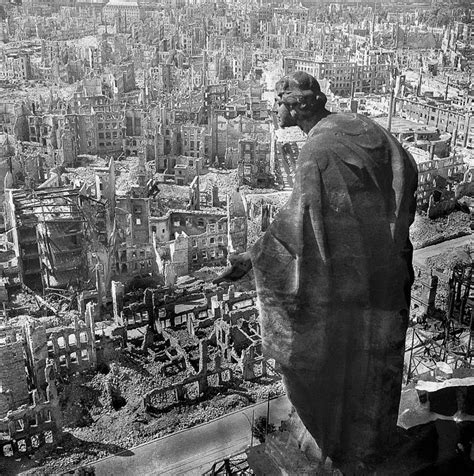
I am in Dresden until late summer. We have rented a fourth-floor apartment in Dölzschen, a village a mile SSE in the foothills with an amphitheater view of Dresden’s city center. Often I forget how closely nestled the German city is to the German countryside. Though German towns now merge into one another like suburbia in America, this five- or six-hundred year old farm village still, if not for much longer, has a sense of the country. The town hall (rathaus) borders the barn yard (bauerhof). It is as if in the morning and evening cows still walk to pasture down the main street.
Our apartment has a high-stadium view of the downtown where the 13-14 February 1945 Dresden firestorm gutted the city. One can almost feel, having finished the milking that evening sixty years ago, the farmer hears the horses, agitated, their heavy hooves striking the pen boards a few times, resonance to the first few bombs the pathfinders dropped to mark the target zone, then the silence, then down along the Elbe River, the city beneath the clouds lights up in fire and explosions. The Dresden firestorm killed twenty-five thousand. In the conflagration, the innocent, half-innocent, and guilty alike perished. Such was the first half of Europe’s twentieth century; 25,000 dead barely registered a blip.
Last night I called a Canadian friend. We had hung together when I lived in Berlin in the early 1970s, and we agreed that downtown Dresden, despite post-Communist reconstruction and restoration, emanates (for us at least) a sense of that firestorm night. How could that be, or rather how could we feel Dresden’s mass deaths which we hadn’t noticed when we lived in Berlin? USAAF and the RAF bombed Berlin until Konev and Zhukov’s Soviet Army fought block-by-block across the city, and then loosed their second echelons to pillage and rape the survivors. My Canadian and our youthful and blithe friends focused on good wine and good times. Any ghosts haunting twentieth-century Berlin left us at least in peace.
I’ve written here and here of the memorials dotting the European landscape. It is proper to bear witness, to memorialize a nightmare. To render nightmare into story seems to lighten the bearer’s load. Survivors are compelled to memorialize the wretched experience in stone, novel or poem, and this is good.
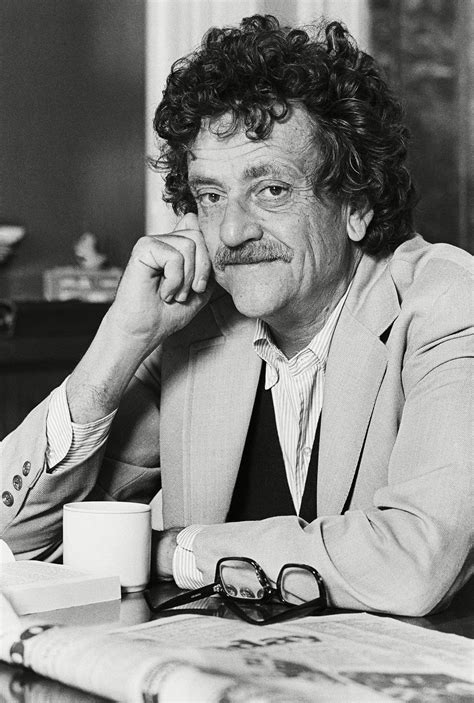
Vonnegut on Dresden: “The Dresden atrocity, tremendously expensive and meticulously planned, was so meaningless, finally, that only one person on the entire planet got any benefit from it. I am that person. I wrote this book, which earned a lot of money for me and made my reputation, such as it is. One way or another, I got two or three dollars for every person killed. Some business I’m in.”
Kurt Vonnegut, author of Slaughterhouse-Five, experienced the Dresden bombing a US POW, the experience burned into his spiritual retina. But where he waxed bitter and indignant, others saw nuance and difference even in area bombing.
Kurt Vonnegut, author of Slaughterhouse-Five, experienced the Dresden bombing a US POW, the experience burned into his spiritual retina. But where he waxed bitter and indignant, others saw nuance and difference even in area bombing.
Victor Klemperer, whose house is just down the street from me and who is buried in the Dolzschen Friedhof, survived the Dresden firestorm, and in the resultant confusion, survived the German annihilation of European Jewry; his journals an eye-witness to ten-year Nazi campaign to annihilate European Jewry.
Victor Klemperer, a Jew (cousin to symphony conductor Otto Klemperer) and decade-long witness to Nazi persecution, survived the firestorm and, because of the Allied bombing of Dresden, survived the Nazi genocide. On February 13, 1945, the Gestapo gave Klemperer the deportation orders (Theresienstadt) to deliver to the last Jews of Dresden. In the post-air-raid chaos, Klemperer tore off his yellow star, joined refugee columns west, and survived the war. His published journals articulate the decade of constant persecution, the Theresienstadt death camp a few miles down the road.
I fall with Victor Klemperer. My father, MSGT Enest L. Townsend, survived the Okinawan Invasion, his division slated to be the first wave to hit the Kyushu beaches, where General George C. Marshall estimated over one million American servicemen’s deaths (not counting Japanese losses) in the invasion. The atomic bombing of Hiroshima and Nagasaki saved millions of lives.
So, though Vonnegut’s take on his bad night in Dresden might make him seem a self-loathing twit compared to Victor Klemperer’s decade-long death watch, it was Vonnegut’s own near-death experience, and he had to make sense of it, however he could. He owned his nightmare; he’d either fix it, or he wouldn’t. It appears he did. He wrote Slaughterhouse Five.
Pre-WWII, Dresden was truly a beautiful and elegant memorial to the best of Baroque architecture, harmonizing one great building with its neighbor. Post WWII, Dresden bombing became a Western anti-war cause celebré in no small part because the before-and-after smoke-blackened photos of marble nymphs and angels made a powerful visual impact upon the blithe, innocent and ignorant.
I suppose I am on my own pilgrimage this year. Save for two tours in Vietnam, I defended Germany against the Soviet Union. My military career was spent in, devoted to, or in some way circled Central Europe. I am not unaware that the word ‘defend’ was euphemistic. I analyzed Soviet war plans and wrote NATO war plans to counter the Soviet war plans. US and USSR war planners imagined the WWIII in Germany.
————————————————————–
According to official German report Tagesbefehl (Order of the Day) no. 47 (“TB47”) issued on 22 March the number of dead recovered by that date was 20,204, including 6,865 who were cremated on the Altmarkt square, and the total number of deaths was expected to be about 25,000. Goebbles seems to have added a zero, i.e., 200,000, which, for many, became a ‘truth.’ Death toll estimates as high as 500,000 have been given.[10]