
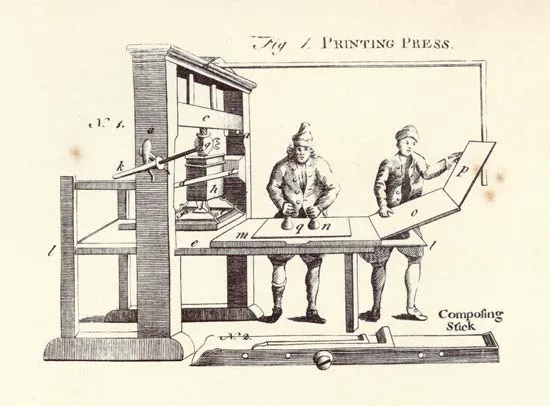
Artificial intelligence is at fiction’s front door. Like any innovation, it had advantages and disadvantages. You approach with care. The automobile gets you from here to there quickly and in comfort, and kills 40,000 Americans annually. The printing press made the bible available to the masses, bringing mass literacy and Europe’s Wars of Religion and the deaths of millions.
Recently,a NYT article, The ‘Shy Girl’ Fiasco Shows Why Trust in Writers Is Plummeting by Andrea Bartz exposed an alleged AI edited book. The publisher, Hachette, pulled the novel from publication because it was (allegedly) AI-written (or extensively edited; it is unclear) (One may need a subscription to link to the full article).
Although the AI usage was discovered, so to speak, AI checks give false positives. Andrea Bartz frets that ” …as A.I. models continue to improve, I am concerned that it will become difficult to distinguish between something written by a human versus a bot. As more A.I.-generated writing is put out in the world, more readers will question whether the text they are poring over was penned by a human. We are barreling toward a rapid erosion of trust between authors and readers, and the publishing industry is unprepared to deal with the consequences.“
Hmmm. I consider spelling/grammar/punctuation tools I use as god-sends.
I use Grammarly.com to spell- and grammar-check my fiction and non-fiction.I use ElevenLabs to produce an audio version for a final proof (I hear flow, grammar, and punctuation mistakes better than I can see them), then, to encourage you to purchase either the paperback of digital version, publish it for most nominal sum possible.
I learned late in life that I am dyslexic and suffer (or enjoy) prosopagnosia (1), a cognitive defects that are both advantageous and disadvantageous. Â Dyslexia? Friends, when short of time, Â do not ask me for information; I examine problems from all over the place. Face blindness? My military career compensated for my difficulty in identifying a familiar face. For soldiers, a quick glance at the breast pocket and collar tab provides first and last name. prosopagnosia was a non-issue until I returned to civilian life.
Nowadays, when Patrice and I enter a party, I cling to her like a shy four-year-old. I compensate for dyslexia by memorizing words and passages through my fingers, i.e., by laboriously recopying a foreign phrase 10 times. Neither more nor less disadvantaged than my peers (I speak Russian and German; French is coming along). Humankind develops compensatory strategies and tools – spears, M-1s, B-1 bombers – to compensate for incisors smaller than those of the saber-toothed tiger. There you go.
I use grammarly.com/pro, which, its blurb asserts, ‘adjusts writing tone, rewrites full sentences, writes fluently in English, and catches accidental plagiarism.’ One day, I clicked a button to run a grammar check, and Holy Smokes! it rewrote a whole chapter.
I read the rewrite. Not bad, I thought. Then, I wondered, isn’t that cheating?
My initial response is to retort manger de la merde¦ un petit peu, mais tous les jours. We all strive to remove error from our work, however we can. ‘
[A friend writes one novel about every 18 months. His quality-control is to serial-marry wives, who, among their duties, listen to his drafts. Sonya Tolstoi recopied War and Peace six times before all the chapters were gathered to published in novel form [It was serialized in the Russian literary magazine Russkiy Vestnik (The Russian Messenger)].
But, before I do anything rash, shouldn’t I compare and contrast i.e., does AI write better than I? My experiment follows:
MY VERSION:
Before the Great Bronze Cannon, cast to fire upon Tartar raiders at the Oka River crossings beneath Moscow, were parked limousines to whisk away delegates attending the 1973 Plenum of the Central Committee of the Communist Party. Within the Great Hall were the nomenklatura – the Soviet gentry – socialist in form, Russian Chauvinist in content. Soviet Army generals were well represented. The Great Fatherland War had scarred the nation, and the Soviet Army had rescued it. The greatest war generals, the Zhukovs, Chiukovs and Rokossovskys, those 243 raised to major general on the 1940 promotion list to replace those purged, were passing on, but the second tier of promotees, those of the war lists, were the phalanx of uniforms among the delegates attending the speech given by General Secretary of the Communist Party of the Soviet Union Leonid Brezhnev. Among them was Colonel General Vladimir Zakharievich Yakushin, Deputy Chief of Staff, Group of Soviet Forces Germany, the combat commander of the vanguard formation, the most powerful Soviet Front in history. He listened to the speech with an attuned Soviet ear. The General Secretary’s speech was like a well-remembered epic poem. One listened for the music and rhythm, familiar passages inspiring memories and recollection, variations recognized and attended instantly.
GRAMMARLY AI VERSION:
Before the Great Bronze Cannon which was cast to defend Moscow from Tartar raiders at the Oka Rive, limousines lined up, ready to whisk away delegates from the 1973 Communist Party Plenum. Inside the Great Hall, the nomenklatura sat alongside Soviet Army generals. These were the Soviet elite: socialist in form but Russian chauvinist in content. Scars from the Great Fatherland War were still visible, as was national pride in the Army’s rescue. The WWII generals – Zhukov, Chiukov, and Rokossovsky – had passed on. They had been on the major general promotion list, created after the 1940 purges. Now, a second tier of generals, promoted during the war, made up the impressive array of uniforms among the delegates as General Secretary Leonid Brezhnev spoke. Colonel General Vladimir Yakushin, Deputy Chief of Staff of the Group of Soviet Forces Germany and commander of its vanguard, also listened attentively. Brezhnev’s speech had the rhythm of a classic epic: familiar, nostalgic, and filled with recognizable variations noted by all.
And no small task it was. During his 1956 General Staff Academy tour, General Yakushin led the staff study of the military manpower requirements for defending the fatherland against a NATO attack. Â Manpower did not exist. Â It was common knowledge that over 20 million Soviet citizens had perished in the war against fascism. Â For his work he had been allowed to see the results of the 1950 census, classified Top Secret. Â Twice that number had perished. Â The Administration of the State Statistical Directorate had been executed to a man in 1951, agents of the German revanchism, but by the mid-1950s, the results were accepted. Â It made sense. Â In 1946, he had returned by train to Moscow from Germany, and the landscape resembled that described by a Genoan trader to Kyiv in 1383. Â The Italian described a landscape devoid of all life, with only hectares of bleached skeletons as evidence of a once thriving metropolis. Â The soldiers who fought the Fascists would not permit this to happen again.
This was no small task. In 1956, General Yakushin led a General Staff Academy study to estimate the number of personnel needed to defend the Soviet Union against NATO. The result was grim: the country lacked people. Official records put Soviet wartime deaths at 20 million, but Yakushin knew from the classified 1950 census that the real figure was double. The State Statistical Directorate was executed for alleged ties to German revanchism; by the mid-1950s, the new numbers were accepted. For Yakushin, this fit his memory. In 1946, returning by train from Germany, the devastation brought to mind a 1383 Genoan account of Kyiv: lifeless, only skeletons marking where cities once stood. Veterans were determined never to see such devastation again.
I find Grammarly.com suitable to grammar/punctuation/spell check fiction, which can help clarify technical works and general non-fiction; However, to me, Grammarly.com/AI ,deadens fiction. So there you go, here we are, sometime in the middle of 2026, AI and Robert Townsend. Claude, my current favorite, is a marvelous researcher, but unfortunately, aims to please. Be careful.
1. https://my.clevelandclinic.org/health/diseases/23412-prosopagnosia-face-blindness. Prosopagnosia is a condition where you struggle to recognize faces or cannot interpret facial expressions and cues. It usually happens because of brain damage, but some people have it at birth. Treatment focuses on underlying causes or helping you adapt so you can recognize people in other ways.
2. Theunclassified technical paper is https://dl.acm.org/doi/10.1145/67312.67328,. The article is Deception and Irony. { https://liarspath.com/deception/deception-and-irony“
3. I did a ChatGPT search using ‘name some commercial AI programs.’ Les voila…