


Long ago, I started a novel, working title, ‘A Berlin Affair’, set it aside, and wrote four other novels. I will soon again take it up.
On October 7, 1973, the combined Arab armies launched a surprise attack on Israel. The Egyptian Army crossed the Suez and drove into the Sinai desert; the Syrian Army attacked the Golan Heights and (in my opinion) came within hours of breaking through into the Jordan River valley. We will never know why the Syrian Army paused on the night of October 9, 1973. Perhaps, the Syrian Army achieved its assigned plan of advance, and halted, as stipulated in the war plan. Or, the Syrian-Egyptian objectives may have been limited.
On the night of October 24, 1973, in response to certain Soviet alerts, Secretary of State Henry Kissinger raised the US alert status to DEFCON 3. US nuclear bombers deployed to dispersal bases. Yours truly, Captain Robert E Townsend, Dog flight commander, 6912th Security Squadron, Berlin, German, was on duty that October 24 night, in the communications center reading message traffic when the printers began spewing printer paper by the tens of feet. US forces were told to prepare for war.
It was Barbara Tuchman’s The Guns of August all over again. (Her fundamental point was that the WWI couldn’t be stopped once the Imperial German Army’s Schlieffen plan was set in motion. Action inspired reaction, and on and on, and millions died.)
The good news
The Soviet Union ignored the US war preparations. Why?
The bad news
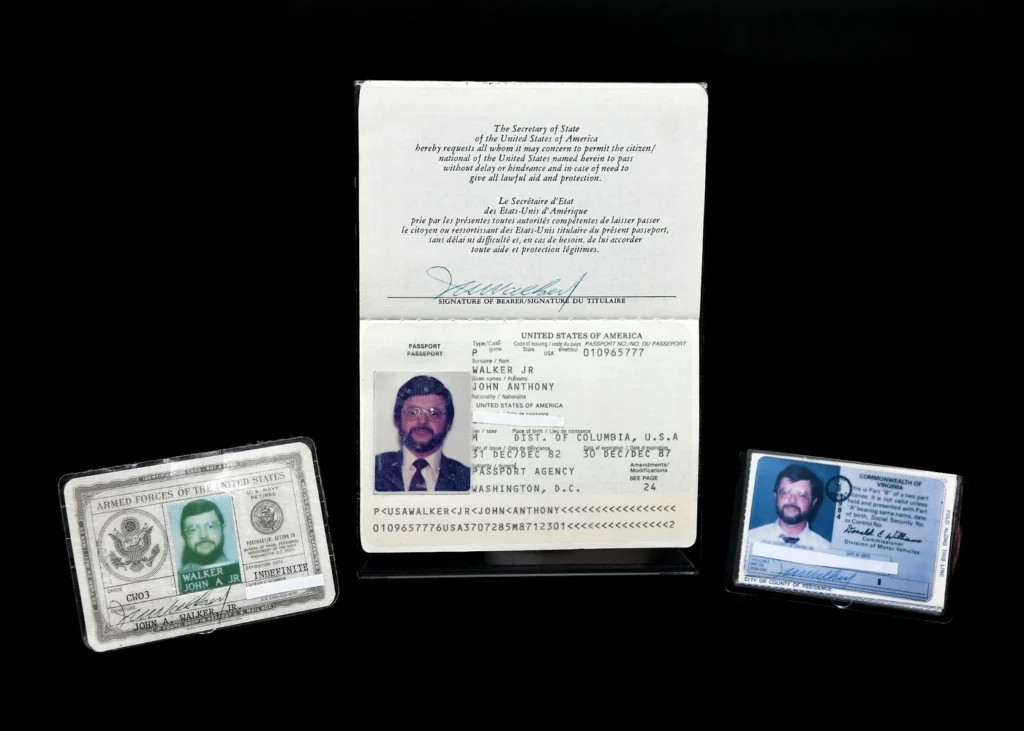
In 1965, US Navy Chief Petty Officer John Walker, a communications specialist, began selling US cryptologic codes to the Soviet Union. From 1967 to 1985, the Walker-Whitworth Spy Ring sold the farm Thus, Soviet intelligence had access to EVERY message the US transmitted. One cannot overstate Soviet access to US secrets—the US SIOP, cryptologic strategy, everything. The US had no secrets (and would have no secrets for years to come). The Soviet cryptologist knew the US cryptologic architecture in detail. (For example, In Vietnam, we wondered how the North Vietnamese Army and Viet Cong knew of our B-52 strikes days before we line officers knew.) To this day it makes me ill to think of it
The good news, if good news there were, was that the Soviet leaders knew the US nuclear alert was a bluff, and blew off Henry Kissinger’s huffing and puffing. This, the 23-year-old first lieutenant that October evening did not know. This lack of Soviet reaction to a US sneeze was unprecedented.
But, this I and the US officer corps did know. The Arab war plan was the Soviet war plan, and we observed the Soviet Army purchasing and preparing on a daily basis the weapons and formations with which they intended to use to over run NATO. The 1973 Arab-Israeli War formed my military career in Berlin, at the National Security Agency, at HQ USAFE, and at HQ USAF–we built the capabilities to defeat the 1973 Soviet war plan.
The novel will unroll in the vicinity of these events.
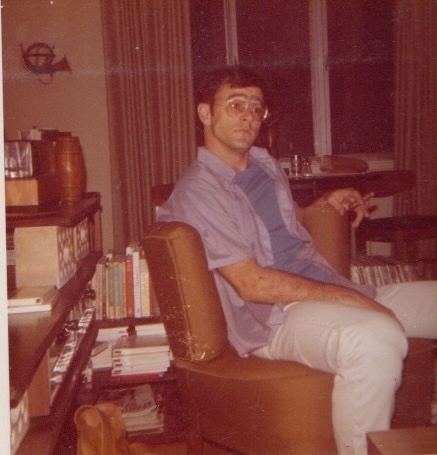
As an aside, I still maintain contact with some 6912th Security Squadron linguists (Berlin, Germany, 1971-1974). As flight commander and from time to time Officer-in-Charge of OPSEC/COMSEC OIC, I gave fire-and-brimstone security indoctrinations. Cotton Mather, the New England fundamentalist preacher who burned witches, had nothing on me. “Lose one codeword scrap of paper, you will spend the rest of your life in Fort Leavenworth (or perdition, your choice)!”
50+ odd years later, grown men still quake at the the memory of my security lectures : ->
A Berlin Affair
Tempelhof Central Airport, 6 May 1973, 0815
A cupola of fog enveloped the square before Tempelhof Central Airport, the Berlin Airlift Memorial disappearing into a translucent roof twenty feet above. The airport terminal’s facade of gray, heavy stone enclosed the square on three sides, silencing it. The fog muffled the sound of Saturday morning traffic crossing the intersection of Marienfelder Allee and Tempelhofer Damm, some two hundred meters distant.
A blue Volkswagen camper van with the green American plates drove onto Luftbrücke Platz and parked in a US Military reserved spot at the Tempelhof Central Airport complex entrance. An Air Force captain in fatigues got out, walked to the passenger side, and opened the door.
A young black woman, her full afro wrapped in a bright red scarf, an orange scarf around her neck over an ankle-length brown leather trench coat, stepped out. and stretched, an oriole spreading its wings, a slash of color to the somber North German morning. She gazed slowly around the fog-enshrouded square as if committing it to memory.
The captain–– tall, broad-shouldered, athletic–– paused, touched her wrist, and spoke close to her ear. She smiled, touched his cheek, and shook her head no. Dark rings circled her eyes.
He opened the sliding door, took out two suitcases, fitted the smaller one under his arm, and offered the other to the young woman. They walked through the morning fog toward the massive concrete-and-steel portals of the terminal entrance.
“Good Morning, Captain Einarsson. How are you this morning, sir?” The officer acknowledged the sentry’s salute with a nod and a “Good morning, Airman Webster.”
“And how are you this morning, ma’am?” She inclined her head, gracious, but did not speak. They walked in silence several yards to the terminal entrance. There, the captain released her arm and, with his back, pushed open the first iron and glass terminal door. He backed through the next one, the door catching the luggage as it closed. She arched an eyebrow, indicating that she saw humor in his ungainliness. The sudden noise and bustle gave the impression of a stock market trading pit in contrast with the enclosed loneliness of the square. Kairi paused at the top of the four steps leading down to the terminal lobby.
“We still have thirty minutes until your flight leaves, Kairi. Would you like a cup of coffee…something…After we check you in?” Jon said.
“Sure, if you think we’ll have time.”
He glanced at the terminal clock. “We have time, let’s go.”
She laughed lightly and put her hand on his shoulder. “Jon, it’s hard to believe so much could change in one month.” She opened her coat. The cut and color drew the eye to a full bust, a slim waist, and long legs. He didn’t need couture to imagine the rest. Kairi had always struggled with her weight, and one day she would lose that fight.
“How do you mean?” though he knew what she meant.
“After I returned from Savannah,” Kairi looked away, her eyes distant, as if watching a movie only she could see. “You had changed.”
“Kairi, I only thought we were spending too much time together.”
“My dear, you work the oddest hours. I rarely saw you. We were together 2-3 times a week.”
“You know what I mean.” He was a single officer in 1973 Berlin, but blunt honesty was not his strong suit.