
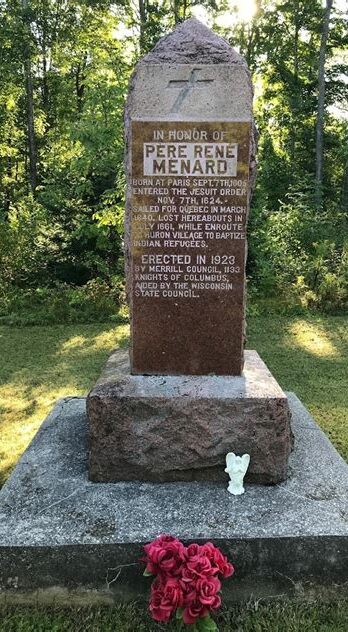
My hometown, Merrill, Wisconsin, on the Wisconsin River, was French trapper, trader and missionary I-90/94 in the 16th. and 17th century . The region supported transient populations of French and Native American tribes until the mid-19th century. And, in the Summer of 1969, Before I left for college, I had a county job building the park across Highway 107 from this Father Menard mounument.
Parc Joly, Semur-en-Auxios, France
Vaulabelle mentions in his book on Semur that, in 1786, Monsieur Joly de Saint Florent received from his friend Chartraire de Montigny, Treasurer General of the States of Burgundy and lord of Bierre-les-Semur, a beautiful statue of “Jason taking the Golden Fleece”. He had it placed in his garden along the Armançon downstream from “his” bridge. It is said to have been sold to Trouville in 1872.
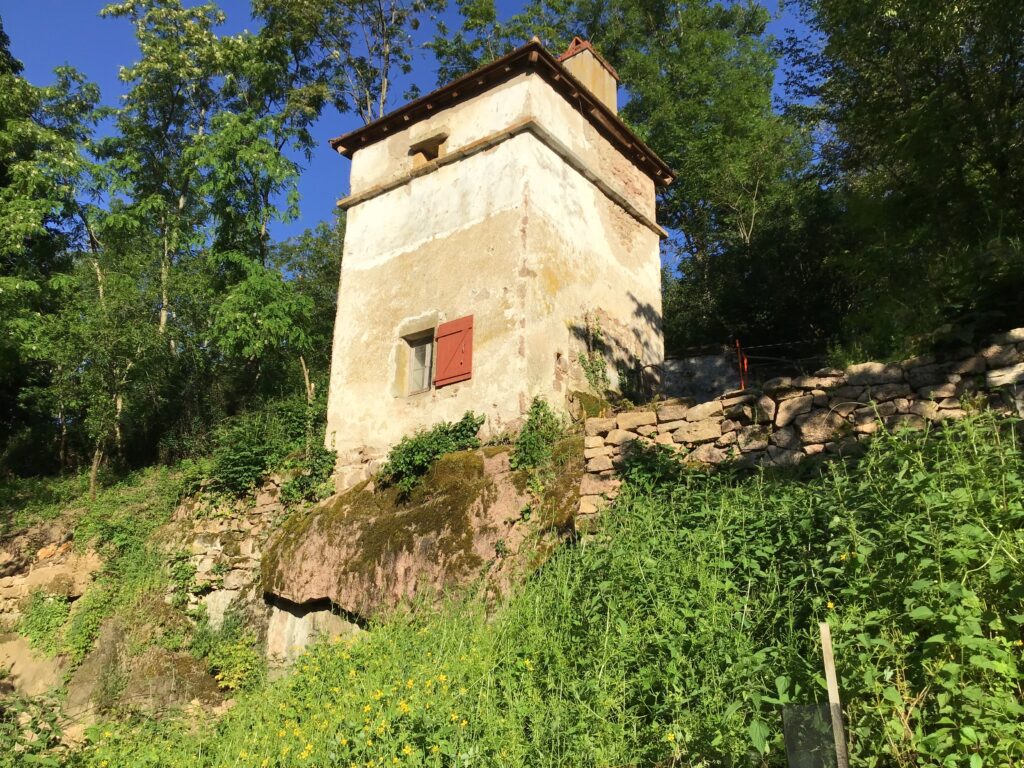

Camp New Wood park:
Camp New Wood was one of numerous logging camps along the Wisconsin River and tributaries that appeared, then were abandoned after the timber stands were cut off. Camp New Wood is located on the site of a Civilian Conservation Corps camp that was active in the 1930’s. The summer 1965, before I left for the University of Wisconsin, I worked for the county ($1.25 an hour) restoring Lincoln County parks.
French influence is lightly sketched upon the history of Wisconsin. French priests, traders and trappers created and named towns––Portage, Prairie du Chien, Lac du Flambeau, St. Croix––and geographic features––Coulees’ (water drainage courses); Lac Supérieur is the largest body of freshwater in the world. The name ‘Wisconsin’ comes from the Jesuit father Jacques Marquette (after whom Marquette University is named) sounding out an Indian name.Â


Rene Menard was a French Jesuit missionary born on March 2, 1605, in Paris. He joined the Jesuits in 1624 and traveled to New France in 1641. Menard was known for his work among Indigenous peoples, particularly the Hurons tribes driven from New York by the six-tribe Iroquois Confederation (Mohawk, Oneida, Onondaga, Cayuga, Seneca, and Tuscarora). He was proficient in several Native dialects.
Missionary Work
In 1660, Menard was sent west from Montreal with a trading party, aiming to establish a mission among the Ottawa in what is now northern Wisconsin. He faced significant hardships during his journey, including separation from his companions and limited supplies.
Disappearance
Menard disappeared in July 1661 while attempting to reach a starving band of Hurons. He became separated from a fur trader named L’Esperance in present-day Lincoln County, Wisconsin . His last known location was near the headwaters of the Wisconsin River. His cassock and breviary were later found, but he was never seen again.
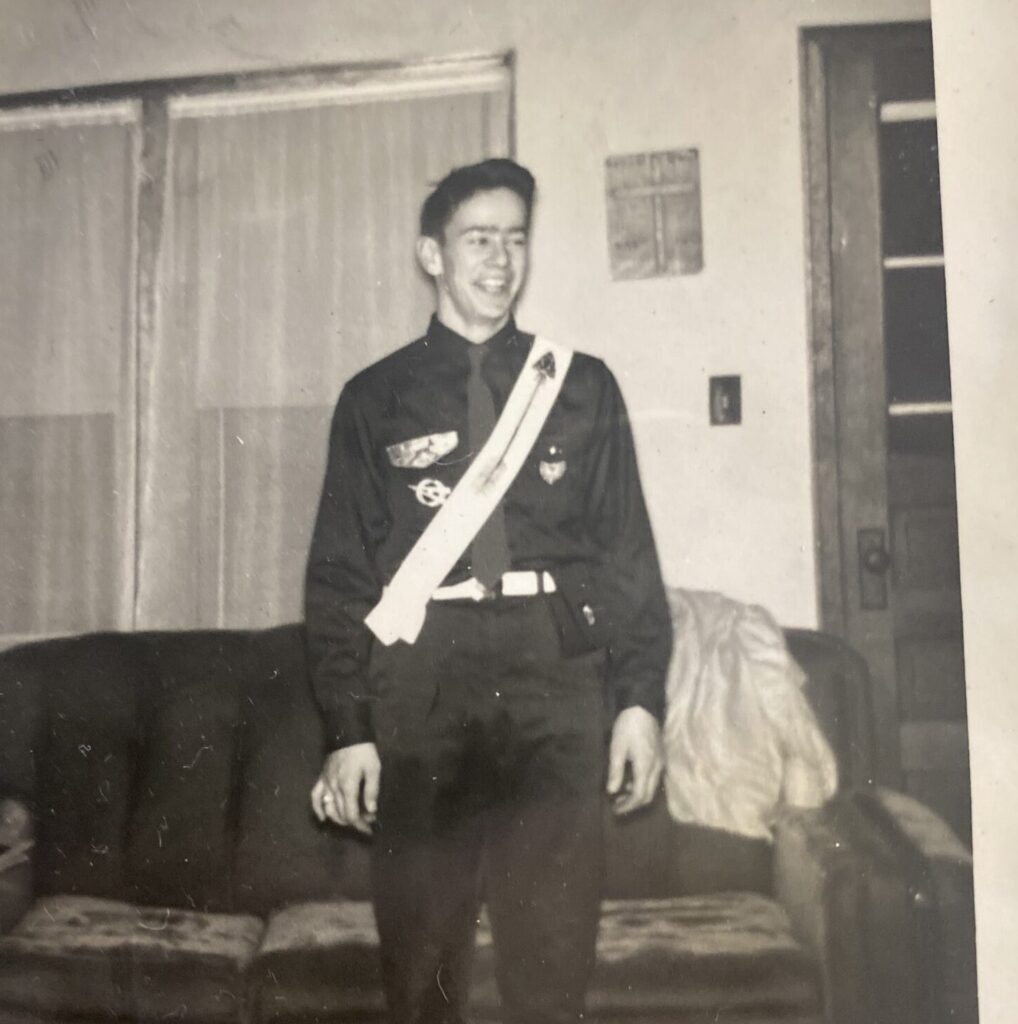
In the summer 1965, an Eighteen-years-old Robert Townsend earned $1.25 an hour (about Euro 1.10) constructing a park across the road from where Father Menard allegedly disappeared. The forests remain similarly dense and untrackable. Seventy-odd-years-later, I help restore Parc Joly, Semur-en-Auxios, France.
Geography: Northern Wisconsin versus Southeast France

A landscape of beautiful rolling hills suggests a superficial similarity between northern Wisconsin and the Cote d’Or. However, each came about through different geologic processes.
Glaciers formed the landscape of Northern Wisconsin. The Pleistocene glaciers ten thousand years ago, at places two miles deep, ground the bedrock, gouged, scoured, flattened and rounded the earth, and when it receded, left a landscape watered and wondrous. Today the Laurentian Upland as a whole is gently rolling with the inter-streams surfaces being plateau-like in their evenness, but the glaciers scoured the topsoil; agriculture is difficult.
Winds off glaciers deposited the rich loess soils of the Cote d’Or. The soil is rich, agriculture florishes. Semur gave its name to the Sinemurian stage of sedimentary deposits from the Jurassic era, characteristic of the Gryphae limestone, a grey-blue marly limestone containing numerous fossilized “oystersâ€.


Sioux-Chippewa battle site near Crandon, Wisconsin, about 20 miles from the Townsend family farm
Presumed site of the siege of Alesia, where the Roman tribe defeated the Celtic tribe
When Julius Caesar defeated the Gallic alliance under Vercingetorix, Gaul was a wilderness of wandering, often warring, tribes [Hevetus, Aedui, Mandubii, and others] and semi-permanent settlements. The Battle of Alesia ( 52 BC) was fought around the Gallic oppidum (fortified settlement) of Alesia [assumed to be the site near Alise St. Reine in modern France), some 15 kilometers from my writing desk.
When French traders arrived in the region now called Wisconsin in the early 1600s, it was a wilderness of wandering tribes. Native settlements appeared and were abandoned. Tribal warfares flared, the more powerful tribes and tribal confederations displacing weaker neighbors. The tribes the French missionaries encountered in Wisconsin, the Potawanimi, Ho Chunk, Chippewa, Menominee, Kickapoo, had been displaced west by the powerful Iroquois Federation of New York, and who in turn displaced the Sioux in the battle of Mole Lake (1806), Wisconsin. Two millennium after Alesia, US Forces defeated the Sauk and Kickapoo tribes in the Black Hawk Wars (1832), opening the region to permanent settlement.