To grow up in the northwoods was to grow up on the edge of things. On Mother’s day, Highway 17 filled with cars heading north past patches of dirty snow remaining in the shaded ditches. On Memorial day the flow reversed, the trees growing bare, the winds cold, nights long, human warmth and light retreating to a single room in a single house within a forest that seemed to stretch to the tundra. This was a near truth. In the 1950s there were three East-West highways between the farm and the Arctic Circle (Highways 8 passing through Rhinelander and Tomahawk, Wisconsin, Highway 2 crossing the Upper Peninsula, and the Trans-Canada).

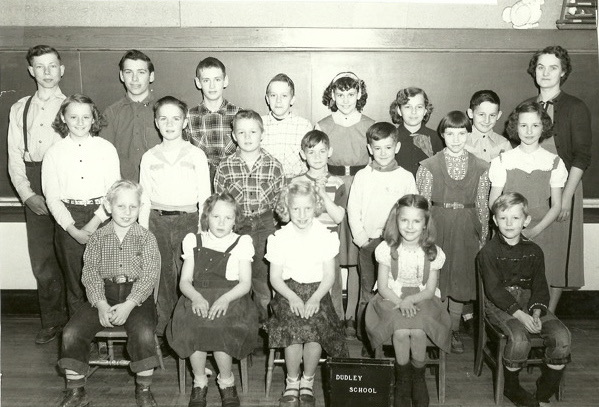
At Dudley Graded School, the Christmas program marked the end of the rural year. Beginning the first week of December, little schoolwork was done. Religious songs framed the program, secular carols interspersed the plays. Santa Claus was the finale, arriving to pass out bags of nuts and fruit.

The forest has reclaimed Dudley, the crossroads mill town which had the general store and to which we would walk when ma needed cigarettes. Of the dance hall, post office, store, lumber mill and hotel, there remain only foundation stones amidst gnarled lilac bushes. The patch of white pines just upstream on the Prairie River has returned to old growth. I measured them in December while smoking a quiet cigar; some are over 110′ high.
The forests seemed magical. My sister tells of watching me enter the woods, rifle slung over my shoulder, as if I were entering an enchanted forest, as if I had walked through an magical wall, which allowed passage to the few and where different laws and perspectives pertained, to return whole meant one had different gifts with different understandings, which the forest no longer imprisoned.
Emptiness was there, not far, at the edge of the forest.